

Roadworthiness / Pre-checks
for Motorcycles
for Motorcycles
Motorcycle
Roadworthiness / Pre-riding Check
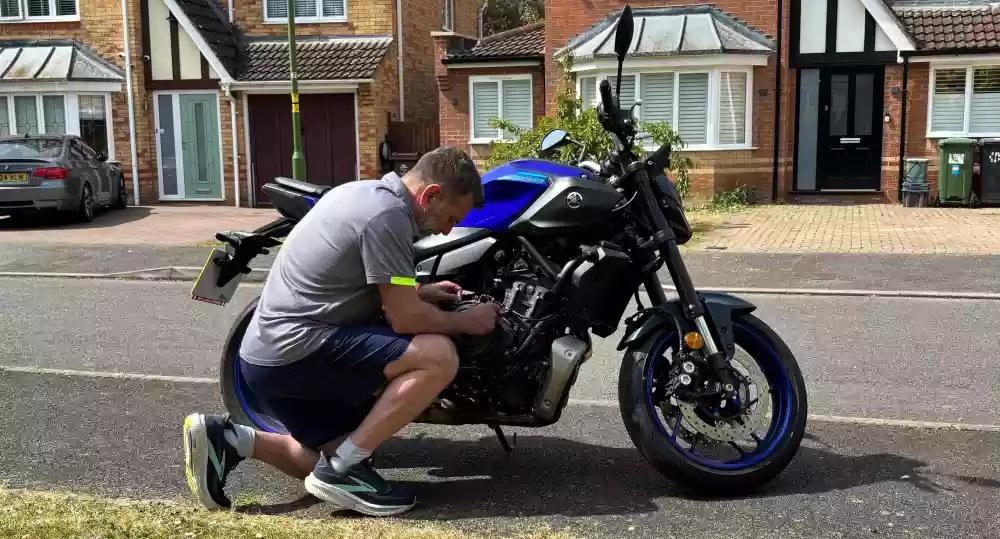
Before you start to ride a motorcycle for the first time each day you should ensure that it is roadworthy. Carry out the following pre-riding checks.
Identify the type of motorcycle you are going to ride.
Identify the type of motorcycle you are going to ride.
- General Patrol / Surveillance / Specialist (Escort Group) / Light Weight (3 wheels)
- Gearbox type (Manual / Automatic) - number of gears and position
- Safety Features - ABS / CBS / Electronic Stability / Traction Control
- Position of controls and auxiliaries
- Glass / Plastic - mirrors and lenses are clean
- Security of carried items - panniers (weight restrictions / balance)
POWDDERS
Petrol - Sufficient fuel for your journey
- Visual check
- Fuel gauge (if fitted)
- Re-set trip meter
Oil - Oil levels / type - follow manufacturer’s recommendations
- Engine Oil
- Dipstick / sight glass - secured / clean
- Secure oil filler cap - top up if required
- Brake / Clutch Fluid
- Levels and colour correct
- No water intrusion / bubbles
- Visual check for leaks on reservoir, hoses and connectors
Water Radiator - water level including coolant / antifreeze mixture
- Visual check for damage to radiator fins / top and bottom hoses
Damage/Drive
- Visual examination of machine
- Insecure panels and/or damage
- Panniers / luggage - secured and balanced
- Visual examination of drive mechanism
- Chain - oiled and correct tension
- Sprockets - no hooked or missing teeth
- Shaft - no leaks - gators in place and not damaged
Electrics
- Verify operation of electrical systems
- Lights - Mandatory running lights (main and dipped beam)
- Brake lights
- Indicators and hazard warning lights
- High intensity lights front/rear (if fitted)
- Number plate light
- Emergency warning lights (Blue, Headlight flash, Rear red)
- Instrument warning lights
- Audible warning systems (horn / Two-tone horns)
- Ancillary systems (heated grips / windscreen position)
Rubber - Wheels
- Free rotation
- Tyres - tread depth / free from cuts, bulges, tears / pressure / compatibility
- Valves - caps in place and free from damage
- Handlebar grips - secure. Throttle (twist and release)
- Footrest rubbers - rider / pillion
- Steering / Suspension
- Headrace bearings - free movement lock to lock and self centering
- Trapped cables (engine tone increase)
Suspension
- Set for weight - damping / rebound
- Pillion / luggage adjustments
- Fork seals - clean and no leaks
Switch on the ignition. Note the warning lights. Ensure gear is neutral. Neutral light illuminated
- Depress the clutch. Start the engine. Release the clutch slowly.
- If any checks could not be completed prior to ignition or start up, do them now
- Carry out a static brake check - front and rear brakes
- Visual check of brake discs and pads
- Adjust seat - if required
- Adjust mirrors - when seated
- Visual inspection of all gauges and warning lights
- Remove machine from centre stand - ensure full retraction
- Check operation of side stand
- Emergency engine cut off switch - check and re-set
As soon as possible after moving off and in a safe place, carry out a moving brake test (see Testing your brakes).
Check gauges and warning lights at intervals during all subsequent journeys taking action if necessary.
Check gauges and warning lights at intervals during all subsequent journeys taking action if necessary.